43Ud79 B Honest Review — Is the Hype Justified?
I remember the day I decided to overhaul my workspace. I was tired of the neck strain from looking between three different mismatched monitors, each with different color temperatures and varying resolutions. I wanted a singular, cohesive canvas where I could spread out my spreadsheets, code editors, and the occasional 4K video project without the physical bezel interruptions. That is when I first encountered the buzz surrounding the 43Ud79 B. It was being marketed as a productivity beast—a "monitor to end all monitors." After spending six months with this massive slab of glass on my desk, I have realized that while the hype is largely justified, there are some very specific "living with it" realities that the marketing materials conveniently gloss over.
In this review, I am going to walk you through my personal journey with this display. I will tell you why I almost sent it back in the first week, how I eventually mastered its quirks, and whether I think it is actually the right investment for your specific workflow. This is not a spec-sheet reading; this is a report from the trenches of daily use.
First Impressions: The Desk Takeover
When I first unboxed the 43Ud79 B, I was genuinely intimidated. Taking a 43-inch panel and placing it at arm's length is a very different experience than watching a 43-inch television from across a living room. I had to physically reorganise my entire desk. My old speakers had to be pushed to the extreme edges, and I realized quickly that my standard depth desk was barely sufficient. In my experience, if your desk is less than 30 inches deep, you are going to feel like you are sitting in the front row of a movie theater—and not in a good way.
The build quality felt utilitarian. It is a matte black affair with a sturdy, albeit non-adjustable, stand. That was the first thing that bothered me. For a professional-grade tool, the lack of height adjustment or tilt felt like a cost-cutting measure that hit the user experience early. I ended up mounting mine on a heavy-duty VESA arm, which I found to be an absolute necessity to get the ergonomics right. Once I had it positioned so the top third of the screen was at eye level, the real testing began.
The Visual Experience: Glossy vs. Matte and Everything in Between
What I found was that the screen coating is one of the most polarizing aspects of this monitor. It uses a light anti-glare coating. In my home office, which has a large window to the side, I appreciated that it didn't turn into a mirror the moment the sun came out. However, I noticed that this coating creates a slight "grain" on pure white backgrounds. If you are a writer or someone who spends all day in Word or Google Docs, you might find this distracting at first. I certainly did. It took me about two weeks for my eyes to stop looking for the texture and start looking at the text.
The resolution is where I truly fell in love. 3840 x 2160 at 43 inches gives you a pixel density that is almost identical to a 27-inch 1440p monitor. For me, this is the "sweet spot." I don't have to use any Windows scaling. I run it at 100%, and everything is perfectly readable. I found that I could fit four full-sized 1080p windows in each corner without any overlap. This transformed how I work. I could have my research in one corner, my drafting in another, my email in the third, and a monitoring dashboard in the fourth. The productivity gains were immediate and tangible.
Color Accuracy and Professional Use
I was surprised by the color out of the box. Usually, these large-format displays lean toward the oversaturated "TV look," but the 43Ud79 B was relatively restrained. After testing for a few days with my own calibration hardware, I found that it covers about 99% of the sRGB color space. While I wouldn't recommend it for high-end color grading for cinema, for my web design work and general photography editing, it was more than adequate. One thing I noticed, however, was the slight darkening toward the extreme corners—a common issue with IPS panels of this size. If you are working on a project where you need absolute color uniformity from edge to edge, those outer three inches might frustrate you.
The Connectivity Matrix
One of the reasons I chose this model was the sheer number of ports. It has two HDMI 2.0 ports (capable of 4K at 60Hz), two HDMI 1.4 ports (4K at 30Hz), a DisplayPort, and a USB-C port. I've been using this for a multi-device setup, and it handles it brilliantly. I have my main workstation plugged into the DisplayPort, my laptop into the USB-C, and occasionally a gaming console or a secondary test machine in the HDMI ports. The USB-C implementation is a bit of a mixed bag; it handles data and video well, but the power delivery is limited. It won't charge a high-powered MacBook Pro under heavy load, so I still have to keep my laptop's power brick connected.
Shop the latest Electronics picks on Amazon.
View Offers →Daily Utility: The Features That Matter
The Picture-by-Picture (PBP) and Picture-in-Picture (PIP) modes are often touted as the "killer features" of this display. In my experience, the PBP mode is where the 43Ud79 B truly shines. You can split the screen into two, three, or even four separate inputs. I've used this many times when I'm running a long render on my main PC and want to keep an eye on it while I use my laptop for other tasks. The included remote control makes switching these modes much less of a headache. I was surprised by how much I used the remote. Navigating on-screen menus with buttons tucked behind the bezel of a 43-inch screen is a nightmare; the remote is a lifesaver.
I also discovered that the speakers are surprisingly decent. They aren't going to replace a dedicated soundbar or studio monitors, but they are significantly better than the tinny speakers you find on most 27 or 32-inch displays. They have a bit of "body" to them, which is great for background music or taking a quick video call without fumbling for a headset.
Pros and Cons
- Pros:
- Massive screen real estate that eliminates the need for multiple monitors and confusing bezel gaps.
- 4K resolution at 43 inches allows for 100% scaling, maximizing the usable workspace for text and data.
- Incredible port selection, including USB-C and multiple HDMI 2.0 inputs for high-refresh 4K.
- Included remote control is genuinely useful for adjusting volume, brightness, and input modes.
- The IPS panel provides wide viewing angles, which is essential for a screen this large.
- Effective anti-glare coating reduces reflections in bright office environments.
- Cons:
- The stand is rigid and lacks height or swivel adjustments, making an aftermarket VESA mount almost mandatory.
- Slight luminance drop-off and color shift at the extreme corners of the panel.
- USB-C power delivery is insufficient for charging modern professional laptops under load.
- The anti-glare coating can make white backgrounds look slightly "grainy" or textured.
- Physical footprint is enormous; requires a deep, sturdy desk to be used comfortably.
Comparison: 43Ud79 B vs. The Alternatives
Before buying this, I looked at several other options, including 34-inch ultrawides and other 43-inch competitors. What I found was that the 43Ud79 B sits in a unique spot. Here is a breakdown of how it compares to the typical setups I was considering.
| Feature | 43Ud79 B (Single) | Dual 27" 4K Setup | 34" …
The Data Scientist or Financial AnalystIf your life revolves around massive Excel sheets with hundreds of columns or real-time trading dashboards, this monitor is a dream. The ability to see that much data at once without scrolling is a game-changer. I found that my speed in auditing spreadsheets increased because I could see the source data and the summary results on the same screen without clicking back and forth. The Developer or CoderWriting code on this is an interesting experience. I usually have my IDE taking up the middle 50% of the screen, with documentation on the left and the application I'm building on the right. Because the screen is so tall, you can see significantly more lines of code at once. One thing that bothered me, though, was the "head swivel." If you put your terminal at the very bottom or very top, you will be moving your neck more than you expect. I learned to keep my primary focus area in the center third of the vertical space. The Content CreatorAs I mentioned, for video editing, having a 4K timeline that is actually long enough to be useful is amazing. You can have your preview window at full 1080p resolution and still have plenty of room for your tools. However, if you are a gamer, be warned: this is not a gaming monitor. It is limited to 60Hz. While I enjoyed playing immersive RPGs on this because the size is so engulfing, it is not suitable for competitive shooters where high refresh rates and low response times are critical. Making the Most of Your PurchaseIf you do decide to take the plunge, I have a few tips that I wish someone had told me before I set mine up. First, invest in a "window snapping" software. While Windows has some built-in features, they aren't enough for a screen this size. I use a third-party tool that allows me to define custom grids. This ensures that every time I drag a window, it snaps perfectly to the quadrant I want. Find top-rated Electronics products at great prices. Browse Now →Second, pay attention to your lighting. Because the screen is such a large surface area, it can actually act as a light source. At night, I found the "glow" from a pure white window to be overwhelming. I highly recommend using a "dark mode" for your OS and apps, and perhaps adding some bias lighting (LED strips) behind the monitor to reduce eye strain. This significantly improved my comfort during late-night sessions. What I Wish LG Had ChangedLooking back at my time with the 43Ud79 B, I can see where it could be improved. The lack of a high-quality HDR implementation is a missed opportunity. While it can process an HDR signal, the panel doesn't have the peak brightness or the local dimming zones to make it look meaningful. It often just makes the colors look washed out or "off." I kept HDR disabled for 95% of my use. I also think the USB hub placement is inconvenient. The ports are tucked away in the back, making them hard to reach if you are frequently plugging in thumb drives or peripherals. I ended up plugging a small USB 3.0 desktop hub into the back of the monitor and routing it to the front of my desk for easier access. 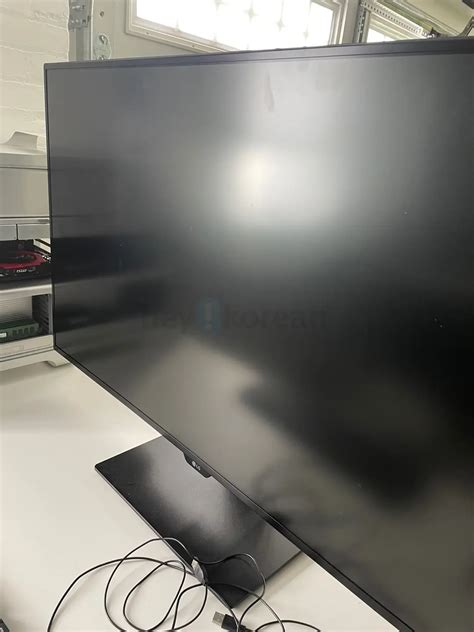
Conclusion: Is the Hype Justified?So, after months of staring at this 43-inch behemoth, is the hype justified? My answer is a resounding yes, but with the caveat that you must be the right kind of user. If you are looking for a singular tool to declutter your desk and massively expand your productivity, the 43Ud79 B delivers in a way that dual-monitor setups simply cannot. The seamlessness of the workspace and the flexibility of the inputs make it a powerhouse for professional workflows. However, you have to be willing to accommodate it. You need a deep desk, you likely need a VESA arm to fix the ergonomic shortcomings of the stand, and you need to be okay with a slight "working-in-the-trenches" aesthetic rather than a sleek, ultra-thin design. I was surprised by how much I came to rely on the extra vertical space and the quadrant-based layout. Going back to a standard 27-inch monitor now feels like trying to paint a mural through a mail slot. It isn't perfect—the corner dimming and the graininess of the coating are real issues—but as a tool for getting work done, it is one of the best investments I have made for my home office. In the end, the 43Ud79 B isn't just a monitor; it's a workspace philosophy. It asks you to stop thinking in terms of "screens" and start thinking in terms of "real estate." If you have the data or the projects to fill that space, you won't regret the purchase. I certainly haven't. Shop Top Electronics Deals on AmazonBrowse the best deals and find the perfect product for your needs. Browse Deals →
As an Amazon Associate I earn from qualifying purchases.
|
|---|