Biggest Precision 5570 2022 Buying Mistakes (And How to Avoid Them)
The Dell Precision 5570 (2022) arrived as a compact, premium mobile workstation aimed at professionals who need desktop-class performance in a svelte chassis. Its combination of high-end CPUs, professional-class GPUs, and high-resolution display options makes it attractive to engineers, content creators, and data scientists. That appeal, however, leads to a lot of common purchasing mistakes — from choosing an inappropriate configuration to overlooking real-world thermal and battery trade-offs. This article walks through the most frequent mistakes buyers make with the Precision 5570, explains why they matter in everyday use cases, and gives practical advice to avoid costly regrets.
Why buyers trip up with the Precision 5570
Two factors drive many of the wrong choices. First, configurability: the Precision 5570 was sold in many possible combinations of CPU, GPU, RAM, storage, and displays, and not every configuration fits every workflow. Second, expectations: prospective buyers often assume a premium thin laptop will behave like a desktop workstation — particularly in sustained heavy workloads — which isn’t always true. Understanding how the Precision 5570 behaves in real-world scenarios helps align expectations and select the right spec.
Detailed product analysis
Design and build
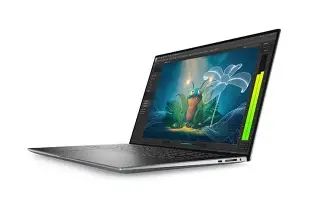
The Precision 5570 follows Dell’s premium language: a slim metal chassis, minimal bezels, and a professional finish. It is notably more portable than many full-size workstations, making it attractive to onsite engineers and traveling creatives. The trade-off is typical of thin-and-light mobile workstations: excellent build quality, but limited internal volume for aggressive cooling and user-replaceable components compared with thicker, heavier models.
Display options and what they mean for buyers
The Precision 5570 offers high-resolution display options, including matte high-PPI panels and color-accurate 16:10 (or near-16:10) aspect screens. For users working with color-critical media, the availability of factory-calibrated panels and wide color gamut is a strong point. However, buyers frequently make two mistakes:
- Choosing the highest-resolution OLED or 4K configuration without considering battery life impacts during mobile use.
- Failing to match the panel type to the workflow — e.g., selecting glossy high-contrast panels when a matte, color-accurate panel would reduce reflections on-site.
For real-world workflows, photographers and video editors may prioritize a wide color gamut and factory calibration, while CAD users often benefit from higher brightness and anti-reflective surfaces for on-location use.
Performance, thermals, and sustained workloads
The Precision 5570 can be equipped with H-series mobile processors and professional-class GPUs suitable for 3D modeling, rendering, and simulation. In short bursts, the CPU and GPU performance can rival larger workstations. The common pitfall: assuming that peak benchmark numbers translate directly to sustained, full-load performance. The thin chassis means thermal limits come into play. In practical terms:
- Short rendering jobs and interactive 3D modeling will feel very fast.
- Long, sustained renders or multi-hour simulation jobs can see CPU/GPU frequencies step down under thermal constraints, which lengthens job times compared with larger, more heavily cooled workstations.
Buyers who routinely run long renders or batch simulations should evaluate whether a thicker mobile workstation or a desktop workstation (or cloud rendering) is a better fit.
Memory and storage considerations
Precision-class laptops generally support generous RAM and fast NVMe storage. Common mistakes include opting for a configuration with insufficient RAM or choosing a single small-capacity drive expecting to expand later. For professional workloads:
- Many CAD assemblies, large datasets, or VM-heavy development environments benefit from 32GB or 64GB rather than the base 16GB.
- NVMe SSDs are fast, but large project files and local scratch space are essential to avoid performance bottlenecks; relying solely on cloud storage or small local drives can hamper work.
Ports, connectivity and docking
The Precision 5570 emphasizes modern ports like Thunderbolt/USB-C; some configurations retain full-size HDMI. Buyers often fail to check how many high-speed lanes are available and whether the chosen configuration supports multiple external displays at required resolutions. For office setups and multi-monitor editing suites, confirm:
- Whether the laptop supports two or more external 4K displays via the available ports.
- What dock or adapter is necessary for legacy peripherals (Ethernet, SD card readers, legacy USB-A devices).
Users who forget to plan for docking end up frustrated when they cannot replicate their desktop productivity setup without an additional purchase.
Battery life realities
High-performance components and high-resolution displays consume more power. The Precision 5570 will perform well on battery for light to moderate tasks, but heavy CPU/GPU use and high-brightness displays reduce runtime sharply. Buyers frequently overestimate mobile uptime, expecting all-day battery life under load. The practical takeaway: for true all-day field work under heavy load, either choose a lower-power configuration, carry a power brick or external battery, or accept shorter runtime.
ISV certifications and professional drivers
Precision workstations often come with independent software vendor (ISV) certifications for software like Autodesk, Dassault Systèmes, and Adobe. These certifications and professional GPU drivers can make a tangible difference in stability and performance for certain workloads. Neglecting to check ISV status for the specific software used is a mistake—professionals should validate that their primary applications are certified on the Precision 5570 or that the chosen GPU has vendor-supported drivers.
Pros & Cons
- Pros
- Premium, compact chassis that balances portability and performance
- Strong single-threaded and burst performance for interactive workloads
- High-quality display options suitable for color-critical work
- Professional GPU and ISV certification options for stability in pro apps
- Modern ports and Thunderbolt support for fast external workflows
- Cons
- Thermal limitations under sustained heavy loads compared with thicker workstations
- High-resolution displays and powerful GPUs significantly reduce battery life
- Limited upgradability in a very thin chassis — RAM and some storage options may be soldered or constrained
- Higher-end configurations can be expensive relative to desktop alternatives offering similar sustained performance
Comparison: Precision 5570 vs. common alternatives
The following table helps buyers position the Precision 5570 against close alternatives a professional might consider when balancing portability, performance, and price.
Looking for the best Electronics deals on Amazon?
Browse Now →| Model | Target user | CPU options | GPU options | Max RAM | Display highlights | Notes |
|---|---|---|---|---|---|---|
| Dell Precision 5570 (2022) | Mobile professionals wanting a thin workstation | H-series mobile processors (high-performance mobile) | Professional-class mobile GPUs (workstation drivers) | Up to 64GB (model-dependent) | High-res 16:10 options, color-accurate panels | Great balance of portability and performance; thermal limits for sustained heavy loads |
| Dell Precision (thicker mobile) | Users who need sustained performance | Higher-TDP mobile CPUs | More powerful mobile workstation GPUs | Often higher than thin models | Similar size displays, sometimes larger thermal headroom | Better for long-duration renders and simulations |
| Lenovo ThinkPad P Series (mobile) | Engineers/enterprises wanting durability and ISV support | H-series mobile processors | Professional mobile GPUs | Up to similar levels | Matte, calibrated options | Often more repairable and serviceable in enterprise environments |
| Desktop workstation / cloud | Users prioritizing raw sustained compute | Full desktop CPUs or cloud instances | High-end workstation/GPUs | Effectively unlimited via server configs | Depends on external monitors | Best sustained performance; less portable |
Buying guide: Mistakes to avoid and practical tips
Mistake 1 — Underestimating RAM requirements
Why it matters: modern professional applications, browser tabs, and background services add up. Running virtual machines, large datasets, or complex CAD assemblies will quickly consume RAM. Buying a machine with 16GB because that is the lowest-cost option often leads to swapping, slowed workflows, and early upgrade pressure.
How to avoid it: choose 32GB as the baseline for serious professional use. If the workload involves very large datasets, 64GB is a safer long-term choice. Verify whether RAM is user-upgradeable or soldered — if it's soldered, buy the higher capacity up front.
Mistake 2 — Picking the wrong display option
Why it matters: display choice affects color accuracy, battery life, and comfort. A dazzling OLED or 4K panel is attractive in spec sheets but may introduce reflective surfaces, higher power draw, and oversaturation for certain workflows.
How to avoid it: match the panel to usage. For color-critical creative work, choose a factory-calibrated wide-gamut panel. For outdoors or frequent client presentations, prefer higher-brightness, anti-reflective matte panels. Consider whether you need the highest resolution for screen real estate versus battery life.
Mistake 3 — Ignoring sustained thermal behavior
Why it matters: peak CPU/GPU benchmarks are often single-run figures. Under sustained load, thermal management throttles frequencies to keep temperatures safe. This results in longer render times or reduced simulation throughput compared with thicker machines or desktops.
How to avoid it: read or watch reviews that include sustained-load tests. If possible, test the laptop with representative workloads or choose a model with a hi…
Mistake 4 — Overlooking ports and docking needs
Why it matters: modern thin workstations rely on Thunderbolt/USB-C, and users with legacy peripherals may need docks or adapters. Not planning for this leads to fragmented setups and unexpected extra purchases.
How to avoid it: list required peripherals (Ethernet, SD, multiple monitors, USB-A devices) and verify the laptop's native ports and Thunderbolt capabilities. Budget for a dock if the workflow demands multi-monitor setups or many wired connections.
Mistake 5 — Assuming long battery life under heavy workloads
Why it matters: configurations with high-resolution displays and professional GPUs drain the battery quickly under load. This is critical for people who work on the go without reliable access to power.
How to avoid it: if mobile all-day work is essential, choose a lower-power display or GPU option, carry a spare power adapter or a power bank (verify power delivery support), or plan to offload heavy processing to a desktop or cloud when on battery power.
Mistake 6 — Not checking ISV certification and driver support
Why it matters: professional drivers and ISV certification can be the difference between stability and frustrating crashes or rendering artifacts in specialized applications.
How to avoid it: before purchase, confirm that the primary software used (e.g., specific CAD, CAM, or DCC apps) is certified for the Precision 5570 or the GPU option chosen. If the workflow demands certified drivers, prefer configurations that include the professional GPU and driver stack.
Shop the latest Electronics picks on Amazon.
View Offers →Mistake 7 — Overpaying for features you won’t use
Why it matters: the highest-performance CPUs, top-tier professional GPUs, and ultra-high-res displays add cost. Some buyers pay extra for peak specs they rarely use, increasing initial costs and reducing value.
How to avoid it: evaluate typical daily workloads and choose a balanced configuration. For example, if most work is interactive CAD and occasional renders, a mid-range GPU with ample RAM might deliver the best value. Build for the typical day, not the occasional extreme task.
Quick configuration checklist
- Set RAM baseline to 32GB for serious professional use; 64GB for large datasets or VMs.
- Match display type to use case: color-critical = wide-gamut calibrated panel; field use = high brightness matte.
- Confirm GPU ISV certification for primary software.
- Verify ports and multi-monitor support; budget for a dock if needed.
- Check whether RAM and storage are user-upgradeable.
- Review sustained-load thermal behavior in third-party tests.
- Plan for battery usage under heavy loads — bring power where necessary.
- Consider warranty and on-site support options if downtime is costly.
Real-world use cases — matching configuration to workflow
CAD and 3D modeling
Needs: stable 3D viewport performance, ISV-certified GPU drivers, moderate to high RAM for assemblies.
Recommended: professional GPU option, 32–64GB RAM, high-brightness matte display to avoid reflections in shop or field environments, confirmed ISV certification.
Video editing and color grading
Needs: high-resolution, color-accurate display, fast NVMe scratch storage, strong GPU acceleration for codecs and effects.
Recommended: wide-gamut calibrated panel, 32GB+ RAM, dual NVMe or large single drive for media, mid-to-high GPU configuration depending on timeline complexity.
Data science and software development
Needs: RAM for datasets and VMs, fast CPU for preprocessing, adequate storage for datasets and local caches.
Recommended: 32–64GB RAM, larger NVMe storage, prioritize CPU and memory over discrete GPU unless GPU-accelerated ML is used.
Conclusion
The Dell Precision 5570 (2022) is a compelling thin mobile workstation that blends portability and professional performance. The most common buyer mistakes stem from a mismatch between expectations and real-world behavior: selecting specs based on peak numbers without considering sustained thermal performance, underestimating RAM and storage needs, and picking display or port options without a clear plan for daily workflows. By matching the configuration to the actual use case, checking ISV certification where relevant, and planning for docking and power needs, buyers can avoid regret and get a machine that truly supports their professional work.
Careful attention to the trade-offs — especially between portability and sustained compute capability — and a modest amount of pre-purchase research will make the Precision 5570 a versatile and effective tool rather than an expensive compromise.