Is the Backbeat Go 810 Wireless Still Good in 2026? Long-Term Review
Introduction
When I picked up the Backbeat Go 810 Wireless headphones, they weren’t exactly the latest release—even then. But the promise of reliable noise cancelling, solid battery life, and a minimalist design drew me in. Now, after several months (and, admittedly, a few accidental drops), I feel well-equipped to answer a question I see pop up a lot in forums and friends’ DMs: “Is the Backbeat Go 810 Wireless still a good buy in 2026?”
In this long-term review, I’ll walk through my hands-on experience with the Backbeat Go 810—what’s aged well, where the cracks are starting to show (sometimes literally), and whether these headphones are still worth considering in a market overflowing with new ANC models boasting fancy AI features. I’ll break down the pros and cons with real-life details, offer a buying guide with what I wish I’d known before purchasing, and help you decide if the 810s belong on your head in 2026—or if you’re better off looking elsewhere.
Unboxing and First Impressions
I’ll admit: pulling the Backbeat Go 810s out of the box was underwhelming the first time. There’s a definite sense these are “no-nonsense” headphones. The packaging was simple—nothing fancy, just the headphones, a soft pouch, a USB-A to micro-USB charging cable (not USB-C, to my chagrin), and a 3.5mm cable for wired listening. No hard case, which I soon learned was a mixed blessing for travel.
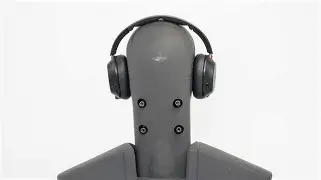
The headphones themselves have an understated design. The matte plastic has a slightly rubberized feel, which feels good in the hand but, over time, has collected its fair share of smudges. All the controls (power/Bluetooth, volume, and NC mode) are clustered on the right earcup and fairly tactile, but not always as intuitive as they could be.
My first impression, putting them on, was that the ear cups were surprisingly generous for an over-ear pair—definitely more comfortable than most on-ears I’ve used. The headband is padded and decently adjustable, and the overall weight distribution felt good. But I noticed right away that the adjustment sliders have a very light click; if you throw them into a bag a lot, they might need frequent readjustment.
Build Quality & Comfort After Months of Use
After using these regularly in 2026, I can say the build is a double-edged sword. On the positive side, I appreciate that they’re lightweight and never gave me that “hot ears” sensation even after 2-3 hour stretches. The padding is high-density foam, and while the earcups haven’t flattened out, the covering isn’t as soft as competitors. I’ve noticed some minor flaking on the edges—a pretty common issue in headphones at this price bracket after a year or two.
There’s minimal creaking when adjusting, and the folding hinges are still tight, but the overall plastic build means you’ll want to be gentle. I did experience a hairline crack at the Y-junction above one earcup after a drop, but it hasn’t affected functionality so far. The headband, though comfy, could benefit from a bit more grip if you have finer hair—the headphones can slip with vigorous activity.
In short: they feel good for long sessions and have survived being tossed into bags and the odd desk drop, but they aren’t indestructible, and the padding’s wear and tear is visible by this point.
Connectivity & Controls
Pairing is as you’d expect—Bluetooth 5.0, with multipoint support. Switching between my laptop and phone remained painless most of the time, but there were a few quirks. Sometimes, I’d lose audio after a Teams call and need to re-pair, which seems to be a common Bluetooth bug rather than a 810-specific one. I wish they’d updated to Bluetooth 5.2 or higher.
Discover deals on Audio & Headphones — updated daily.
Browse Now →Physical controls are a real differentiator—no touch surfaces here. I value that, especially with gloves in winter. However, I found the button layout a bit cramped at first. After a week, muscle memory took care of that, but I’d sometimes still skip two tracks instead of one or activate my phone’s voice assistant by accident.
One persistent annoyance is the lack of any automatic pause when removing the headphones. In 2026, when nearly every set of mid-range cans does this, it’s a feature that really feels missing.
Sound Quality: The Honest Take
Let’s get real—sound is subjective, and my playlist is all over the place, from jazz and post-rock to video game scores and the occasional Top 40 hit. So, how do the Backbeat Go 810s hold up?
The sound signature is smooth, with a pleasant emphasis on lower mids and bass, but not overwhelming. I was surprised at how balanced they remain, even at highe…
Clarity is good, with vocals in podcasts and voice calls coming through cleanly. Instrument separation on complex tracks is decent, but not amazing—it’s better than budget headphones, but you won’t mistake these for audiophile gear. Active Noise Cancelling (ANC) has two settings (low/high): it’s not class-leading but sufficient for most commutes, dulling engine hum and chatter to a low background buzz. On high, there’s a mild hiss, but less than on some older models I’ve tried.
If you care about codecs: these support SBC and AAC, but no aptX or LDAC. On my Android, I noticed a slight latency when watching YouTube, but nothing unmanageable.
Battery Life & Charging
Plantronics originally billed these for up to 22 hours with ANC on, and I consistently hit about 18-20 hours per full charge, depending on volume and usage. With ANC off, that stretched closer to their advertised 28 hours. Realistically, I’m charging these every week with regular use.
What stings in 2026, though, is the micro-USB charging port. It was already dated in 2020, and now I have to dig for that one cable in my drawer while everything else shares USB-C. Charging time is about two hours for a full charge from empty—there’s no quick-charge mode, and you don’t get any battery percentage indicator, just a voice prompt for “battery high/medium/low.” I’d have loved some more precise battery feedback.
Looking for the best Audio & Headphones deals on Amazon?
Shop Amazon →Microphone & Call Quality
This is where the 810s show their age a bit more. Call quality for me, on both Zoom and traditional phone calls, has been functional but not flawless. My voice comes through clear in quiet rooms, but with street noise or wind, colleagues have said my audio turns muffled. There’s no beamforming or environmental noise cancellation like newer models.
If you’re planning to use these regularly for calls or remote meetings, they’ll do in a pinch, but I’d look for something newer (or use a dedicated mic) for the sake of clarity and background noise handling.
App Support & Customization
One thing I found a bit frustrating was the inconsistency in app support—Plantronics’ Backbeat app is long gone from app stores, and the alternatives around offer limited functionality. Without the app, you lose out on most customization, EQ adjustment, or firmware updates. Out of the box, you’re limited to toggling ANC and volume via hardware buttons. For me, the stock sound was fine, but if you prefer tweaking EQ, you’re out of luck.
Pros & Cons
- Great overall comfort — even for long listening sessions, with minimal ear fatigue.
- Balanced, fatigue-free sound signature — bass is punchy, but not overwhelming; vocals stand out nicely.
- Solid battery life — real-world use comes very close to advertised times.
- Physical controls — tactile buttons are consistent, especially in cold weather.
- Reliable multipoint Bluetooth — fairly seamless between two devices.
- Outdated micro-USB charging — no USB-C means extra cables to carry in 2026.
- Padding wear & tear — earcup material is showing its age.
- So-so ANC performance — does the job, but can’t compete with the latest market leaders.
- Lack of app/EQ support — stuck with factory settings after 2025.
- Average call quality — fine for quiet indoor rooms, not great outdoors or with background noise.
Backbeat Go 810 vs Modern Alternatives
| Feature | Backbeat Go 810 (2026) | Sony WH-CH720N | Anker Soundcore Life Q30 | Skullcandy Hesh ANC |
|---|---|---|---|---|
| Release Year | 2019 | 2023 | 2021 | 2022 |
| Battery Life (ANC On) | 18-20 hours | 35 hours | 40 hours | 22 hours |
| Charging Port | Micro-USB | USB-C | USB-C | USB-C |
| Noise Cancelling | Active, 2 modes | Active | Active, custom EQ | Active |
| Bluetooth Version | 5.0 | 5.2 | 5.0 | 5.0 |
| Companion App with EQ | No (discontinued) | Yes | Yes | No |
| Multipoint Support | Yes | Yes | No | No |
| Physical Controls | Yes | Yes | Yes | Yes |
| Auto Pause When Removed | No | Yes | No | No |
Buying Guide: Who Should (and Shouldn’t) Consider the Backbeat Go 810 in 2026?
After several months of hands-on use, here’s what I think is worth considering before you buy:
Who Should Buy
- Bargain hunters and second-hand shoppers: If you find a set of Go 810s at a steep discount or lightly used, they’re a solid deal for basic ANC and comfort.
- Multipoint fans: You need clean switching between two devices often (e.g., laptop and phone) and want physical buttons over finicky touch controls.
- Battery-first users: You don’t want to worry about charging every day, and you’re not bothered by the lack of fast-charge.
- People who dislike touch surfaces: The tactile, reliable controls are old-school, but I really grew to love them.
Who Should Skip
- USB-C loyalists: If you never want to see a micro-USB cable again, you’ll be annoyed here—simple as that.
- Frequent callers/remote workers: The mic is serviceable, but new models are just much better for calls.
- EQ tweakers/audiophiles: With app support gone, you’re stuck with the default sound, which is good but not customizable.
- Frequent travelers or heavy commuters: Modern ANC headphones suppress noise much better, especially for airplane or train use.
Key Questions to Ask Yourself
- Is multipoint pairing a must-have for your routine?
- Do you mind the lack of modern smart features (auto-pause, quick charge, voice assistants)?
- Is getting up-to-date service or firmware updates important to you?
Conclusion: Still Worth It in 2026?
So, is the Backbeat Go 810 Wireless still a good buy in 2026? In my experience, the answer is a qualified “yes”—but with some big caveats. These headphones have held up nicely for casual listening, especially over long work sessions where comfort and battery life are most important. Their balanced sound, reliable buttons, and multipoint Bluetooth support kept them relevant for my day-to-day work and commutes. But, after living with them past their prime, the dated micro-USB port, aging materials, and lack of app/EQ support remind me constantly that these are now “last-gen” headphones.
If you can live without bleeding-edge features and don’t mind hunting down the right charging cable, the Backbeat Go 810 is still a surprisingly competent workhorse in 2026—especially if you find them at a bargain price. For those who need modern ANC, custom EQ, or do a lot of remote work, however, you’re probably better off investing in one of the newer models. As for me, despite their flaws, the Go 810s have earned a regular spot on my desk, and I’m not in a hurry to replace them just yet.